The Role of a Website in Your Sales Funnel
For Australian small and medium businesses in 2026, the website has evolved far beyond a simple online brochure. It’s now the central engine driving your entire sales funnel—the place where strangers become aware of your brand, evaluate your products or services, and ultimately decide to buy or enquire.
At Pixel Fish, our Sydney-based team specialises in building WordPress websites and WooCommerce stores that do more than look impressive. We design sites that actively move visitors through the customer journey, from that first Google search all the way to becoming a paying customer and loyal advocate.
So what exactly is the role of a website in your sales funnel? Simply put, your website underpins every stage of the buying process. It captures organic traffic and paid traffic from search engines, educates potential customers with valuable content, builds trust through social proof and case studies, and provides the crucial checkout page or contact forms that convert leads into revenue.
The difference between a website that generates results and one that just sits there? Integration. While your website and sales funnel serve different purposes in digital marketing strategies, they must work together for the best results. Throughout this article, we’ll show you how to design a WordPress site that intentionally supports every funnel stage—giving you practical, implementation-focused guidance relevant to professional services firms, trades, and online retailers across Australia.
Understanding Your Sales Funnel (and Where Your Website Fits)
A sales funnel is a visual representation of the path potential clients take from first hearing about your business online to making a purchase and becoming repeat customers. Think of it as an inverted pyramid: wide at the top where you attract many visitors, gradually narrowing as prospects move through awareness, consideration, and decision stages.
Consider a Sydney accountant’s typical funnel. A small business owner searches Google for “BAS lodgement help Sydney,” lands on a blog page, reads a few articles, downloads a tax checklist (becoming a lead), receives email marketing campaigns over several weeks, then books a free consultation and eventually signs up as a client.
In 2026, most prospects will interact with your website at least twice during their decision-making process—often many more times. Even if the final close happens over the phone or in person, your web pages have already done the heavy lifting of building awareness, establishing credibility, and nurturing leads toward that moment.
This is why Pixel Fish always designs site architecture, navigation, and content structure around these funnel stages. Rather than building “pages we think we need,” we map out where each page fits within your sales funnel strategy and what action it should prompt visitors to take next.
Imagine a 4-stage funnel diagram. At each level, there are specific website touchpoints: blog posts at the top, service pages in the middle, pricing and contact pages near the bottom, and customer portals at the base.

The Core Funnel Stages Your Website Must Support
Awareness Stage
This is where potential customers first discover your brand. They might arrive via search engines, social media, or referrals. Key website touchpoints include SEO-optimised blog posts, Google Ads landing pages, and your home page.
Consideration Stage
Visitors now know they have a problem and are actively evaluating options. They’re reading case studies, comparing services, and looking for relevant information. Important touchpoints: service overview pages, FAQ sections, comparison guides, and lead magnets like downloadable resources.
Decision Stage
Prospects are ready to choose. They need specifics—pricing, inclusions, guarantees, and clear next steps. Crucial touchpoints: detailed service pages, pricing pages, WooCommerce product pages, checkout page, and contact forms.
Loyalty and Advocacy Stage
After the sale, your website continues working. Customer portals, knowledge bases, post-purchase content hubs, and account areas help turn one-time buyers into repeat customers and referral sources.
In practice, users don’t move in a straight line. Someone might land on a blog via organic traffic, jump to your About page, leave, then return a week later directly to the Contact page. Your website must guide visitors forward regardless of where they enter.
Top-of-Funnel: Using Your Website to Drive Awareness
The awareness stage is about being discovered by the right people—not just generating more traffic for its own sake. Every marketing channel you use (SEO, social media, referrals, paid advertising) should ultimately point back to your website as the central hub.
For many businesses, SEO-led content is the most sustainable way to drive top-of-funnel awareness. Blog posts, guides, and FAQ pages that answer real questions your target audience is searching for will attract qualified visitors month after month. But this only works if your WordPress site has a clean, fast build that search engines can easily crawl and index.
First impressions happen in seconds. Your visual brand identity, hero messaging, and clear navigation must immediately communicate what you do, who you serve, and why visitors should stick around. A confusing home page or slow-loading site will send prospects straight to your competitors.
At Pixel Fish, our typical awareness tactics include keyword research tailored to Australian markets, blog libraries structured around pillar topics, resource hubs with downloadable guides, and optimised service pages that directly answer common customer questions.
Designing Awareness-Focused Pages and Content
Structure your awareness content strategically. Create a blog page organised by categories, develop pillar articles on core topics, and support them with related posts—all internally linked to your cornerstone service or product pages.
Awareness-stage pages should follow these design principles:
- Strong above-the-fold headings that communicate value immediately
- Scannable subheadings every 2-3 paragraphs
- Short paragraphs (3-4 sentences maximum)
- Multiple internal links to deeper content
- Clear visual hierarchy
Use compelling imagery, brand photography, custom icons, and simple explainer graphics instead of generic stock imagery. Compelling imagery, video, and customer testimonials appeal to emotions and help customers visualize product benefits. Your visuals should quickly communicate what your business does and whom you serve.
Content types that perform well in 2026 for generating leads include:
| Content Type | Example | Best For |
|---|---|---|
| How-to articles | “How to Choose a Web Designer in Sydney” | Service businesses |
| Complete guides | “The Complete Guide to WooCommerce Shipping” | eCommerce |
| Comparison posts | “WordPress vs Squarespace for Australian Businesses” | Consideration stage |
| Downloadable checklists | “Website Launch Checklist” | Lead capture |
Calls-to-action at this stage should be low-friction. Use phrases like “Read next,” “Download the guide,” or “View our services” rather than aggressive “Book a call now” buttons. You’re building awareness, not closing sales.

Middle-of-Funnel: Turning Visitors into Qualified Leads
Middle-of-funnel visitors already know they have a problem. They’re actively evaluating options and comparing solutions. Your website’s job now shifts from generating awareness to educating prospects and qualifying them as potential clients.
For service businesses, this is where enquiry forms, lead magnets, and educational content become powerful tools. Case studies showing results for similar clients, detailed FAQ sections addressing common objections, and comparison pages help prospects see you as the best solution.
For WooCommerce sites, product category pages, detailed product pages, and “how to choose” guides move users from casual browsing to building a shortlist. Targeted content that addresses specific use cases helps shoppers self-qualify.
Pixel Fish designs websites so that every core page has a logical “next step.” We never leave visitors wondering what to do next—there’s always a clear path forward to keep them moving through the funnel instead of bouncing.
Focus on specific on-page elements that build trust:
- Customer testimonials placed strategically near key decision points
- Detailed service explanations that answer “what’s included?”
- Strategic internal links to case studies and portfolio items
- Trust badges and certifications relevant to your industry
Lead Capture, Nurturing, and Qualification on Your Site
Lead capture forms are among the most important tools on your website. Common types include:
- Enquiry forms: General contact requesting more information
- Quote request forms: Specific service or product pricing requests
- Newsletter opt in: Email list building for ongoing nurture
- Free consultation bookings: Calendar integration for discovery calls
- Downloadable resources: Lead magnets in exchange for email addresses
These elements should appear prominently—above the fold or in well-designed sections. Keep forms short and mobile-friendly, with reassuring microcopy like “We’ll respond within 24 hours” or “No spam, ever.”
Integrate your forms with email marketing platforms and CRMs so submissions automatically trigger segmented nurture sequences. A prospect downloading an eCommerce guide should receive different follow-up content than someone enquiring about professional services.
Content your website should support for nurture flows:
- Gated resource libraries requiring email signup
- Webinar registration pages
- Private content URLs linked from email marketing campaigns
- Thank-you pages with secondary CTAs
Example flow: A visitor downloads “The 2026 WordPress Website Planning Checklist” → lands on a thank-you page with a video → receives a 5-email nurture sequence → clicks through to a strategy call booking page → becomes a qualified lead.
Bottom-of-Funnel: Helping Prospects Decide and Take Action
At the decision stage, your website must remove friction and reduce risk so visitors feel confident to buy, book, or enquire right now. This is where clarity beats cleverness—every word and design element should drive toward conversion.
Decision-focused pages are crucial: pricing pages, detailed service pages, product pages, and contact/booking pages optimised for converting leads. These pages directly impact your revenue and enquiry volume.
When Pixel Fish takes over an underperforming site, we often redesign these core pages first. A confusing pricing structure or buried contact form can leak potential customers at the most critical moment.
Prospects at this stage want specifics:
- Exactly what’s included in each service or product
- Pricing or pricing ranges
- Expected timelines
- Guarantees or warranties
- What happens after they click submit or complete a purchase
Designing High-Converting Conversion Paths and Checkouts
Design a logical “path to purchase” that guides visitors through multiple opportunities to convert. For a service business:
Home → Service Overview → Individual Service Page → Case Study → Contact / Book a Call
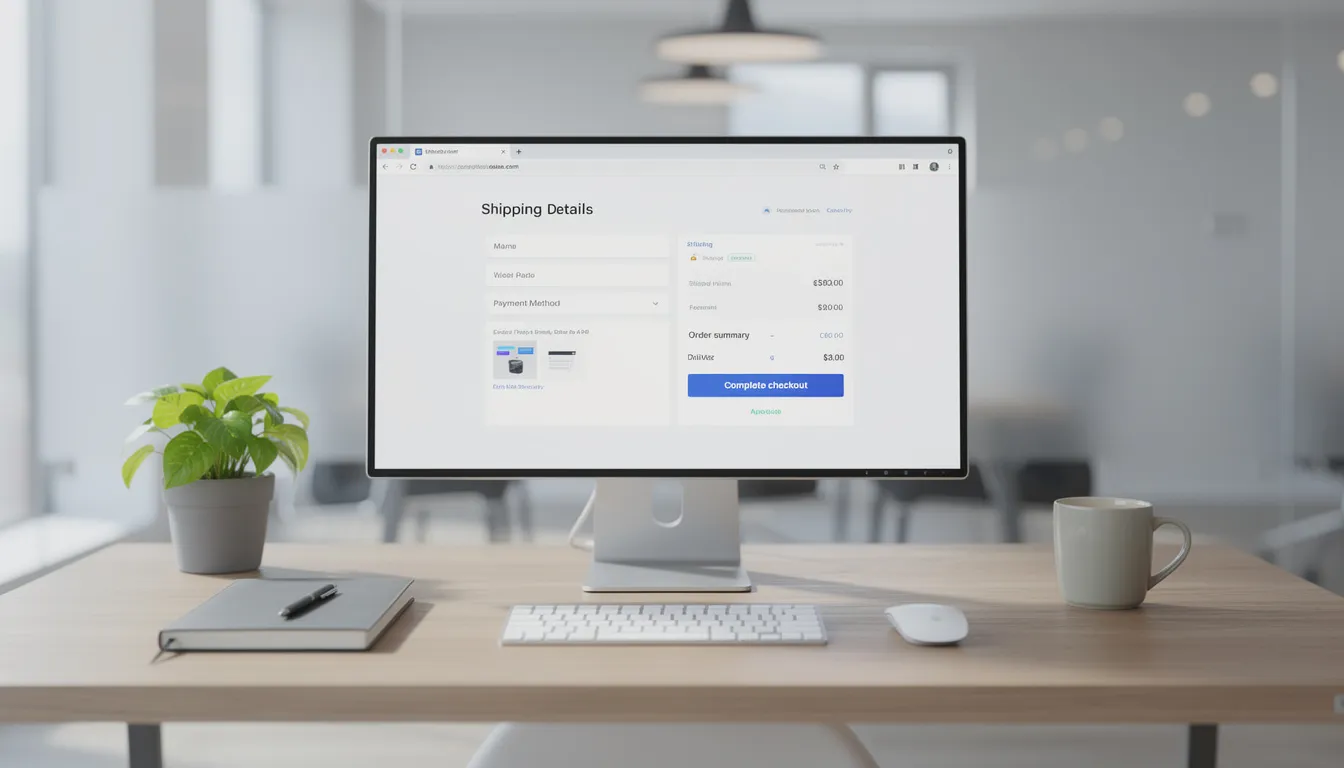
For WooCommerce stores, streamline the cart and checkout page:
- Minimise form fields to essentials only
- Offer guest checkout (don’t force account creation)
- Display trusted payment gateway logos
- Clearly state shipping costs and returns policies upfront
- Show security seals near payment information
Add reassurance blocks near every primary CTA:
- Short testimonials from happy clients
- Client logos (especially recognisable brands)
- Security seals and trust badges
- Clear refund or satisfaction policies
- “What to expect next” bullet lists
Conversion-focused design details that increase conversions:
| Element | Implementation |
|---|---|
| CTA buttons | High-contrast colours that stand out from page background |
| Sticky headers | “Enquire Now” or “View Cart” visible while scrolling |
| Mobile layouts | Simplified navigation, thumb-friendly buttons |
| Landing pages | Single focus, minimal navigation, one primary offer |
For paid traffic campaigns (like Google Ads targeting “web design Sydney”), create dedicated landing pages with tightly aligned copy, no distracting navigation, and a single clear offer.
Creating a Seamless Customer Experience
Creating a seamless customer experience is at the heart of any successful sales funnel strategy. In today’s digital marketing landscape, potential customers expect a smooth, intuitive journey from their first interaction with your business to the moment they become loyal clients. Both websites and sales funnels play crucial roles in this process, each serving different purposes but working best when fully integrated.
Your website acts as the digital storefront for your business, providing a comprehensive overview of your brand, services, and value proposition. Meanwhile, your sales funnel is a targeted pathway designed to guide visitors through the decision making process—nurturing leads, addressing objections, and ultimately driving them toward a purchase or enquiry. When these two elements are aligned, you create a unified experience that supports your business goals and increases conversions.
Understanding your target audience is the foundation of a seamless customer journey. By leveraging website analytics, you gain valuable insights into how visitors interact with your site, which pages attract the most traffic, and where users may drop off. These insights allow you to refine your digital marketing strategies, optimize landing pages, and deliver relevant information at every stage of the funnel. Whether your traffic comes from organic search, paid traffic, or referrals, tailoring your content and calls-to-action to your audience’s needs is key to generating leads and moving them closer to a purchase.
Important tools like lead capture forms and landing pages are essential for generating leads and nurturing them through your sales funnel. Strategically placed forms on your home page, service pages, or dedicated landing pages make it easy for visitors to opt in, request a free consultation, or download valuable resources. Once you’ve captured their details, email marketing campaigns allow you to deliver targeted content, answer common questions, and build trust—helping to convert leads into paying customers.
A user-friendly website is non-negotiable. Clear navigation, concise messaging, and a visually appealing home page ensure that visitors can quickly find the information they need and take the next step. Every page should have a clear purpose and guide users forward in the customer journey, whether that’s learning more about your services, signing up for a newsletter, or making a purchase.
Ultimately, creating a seamless customer experience means providing value and relevant information at every touchpoint. By integrating your website and sales funnel, using website analytics to inform your decisions, and implementing important tools like lead capture forms and email marketing, you can increase conversions, drive business growth, and establish your brand as a trusted authority in your industry.
Beyond the Sale: Building Loyalty and Lifetime Value via Your Website
Your website isn’t just for acquiring new customers—it’s the hub for ongoing client relationships, repeat business, and referrals. Many businesses focus entirely on acquisition and neglect this crucial stage.
Customer portals, knowledge bases, and post-purchase content help clients get maximum value from what they’ve bought. This creates loyalty and reduces churn.
For service businesses, use your site to host:
- Support documentation and FAQs
- Onboarding checklists for new clients
- Forms for change requests or support tickets
- Client-only resource sections
For eCommerce, the website should manage:
- Customer accounts with order history
- Order tracking information
- Related product recommendations (cross selling opportunities)
- Size guides, care instructions, and how-to videos
Pixel Fish’s hosting and support packages keep these client-facing areas secure, fast, and up to date. This ongoing maintenance is essential for maintaining long-term trust with your customer base.
Using Content and Community to Turn Customers into Advocates
Feature customer stories, Q&A articles, and best-practice guides written specifically for existing clients—not just for lead generation. This content serves various purposes: it helps customers succeed while also demonstrating expertise to new prospects.
Retention-focused website tactics:
- Client-only resource sections: Password-protected areas with exclusive content
- Feedback forms: Simple surveys embedded on key pages
- Satisfaction surveys: Post-project or post-purchase check-ins
- Review prompts: On thank-you pages and in post-purchase emails
- Referral CTAs: Clear incentives for word-of-mouth recommendations
Consider integrating loyalty programs via your website: exclusive content for returning customers, discount codes for repeat purchases, or early access to new services or products.
This approach supports reduced churn, higher customer lifetime value, and a successful business built on relationships rather than constant acquisition pressure.
Making Your Website Funnel-Ready: UX, Mobile, and Performance
Even the best sales funnel strategy fails if your website is slow, confusing, or painful to use on mobile devices. Technical excellence directly impacts your conversion rates at every stage.
Most Australian businesses now see more than half their traffic on mobile. Responsive WordPress design isn’t optional—it’s essential. If your site isn’t user friendly on a smartphone, you’re losing potential customers before they even read your first headline.
UX decisions are actually funnel decisions. Navigation structure, page hierarchy, and button labels either move people forward or cause drop-offs. Every confusing menu item or unclear CTA represents leaked revenue.
Concrete performance factors that impact your funnel:
| Factor | Impact | Solution |
|---|---|---|
| Page speed | Slow pages increase bounce rates | Optimised hosting, image compression |
| Core Web Vitals | Google ranking factor | Technical WordPress optimisation |
| Mobile responsiveness | User experience on all devices | Responsive design from day one |
| Hosting quality | Uptime and loading speed | Quality managed WordPress hosting |
Pixel Fish’s hosting and support services directly influence these metrics. We don’t just build websites—we keep them performing optimally.
Accessibility basics also matter for widening your funnel and meeting legal and ethical expectations: clear colour contrast, readable fonts, keyboard navigation support, and alt text on images.
Analytics, Testing, and Continuous Funnel Optimisation
Every sales-focused website needs proper website analytics configured. Essential tools include:
- Google Analytics 4: Traffic sources, user behaviour, conversions
- Google Search Console: Search performance, indexing issues
- Heatmapping tools: Visual insights into user interaction
- Form analytics: Tracking completion and abandonment rates
Key metrics that relate directly to funnel performance:
- Traffic by channel (organic traffic, paid traffic, direct, referral)
- Bounce rate on key landing pages
- Scroll depth on long-form content
- Conversion rate on enquiry forms and checkout pages
- Time to conversion across different user segments
Website analytics provide insights you can act on. For example, A/B testing headline variations on a high-traffic service page, testing different form lengths, or comparing CTA button colours and copy.
Establish regular review routines—monthly or quarterly—where you examine funnel metrics, identify leaks, and implement focused website changes. Small improvements compound over time.
Pixel Fish helps clients interpret analytics and turn insights into concrete WordPress design, layout, and content improvements. Data without action is worthless.
The Role of Your Website in Your Sales Funnel: Best Practices for Digital Marketing
Digital marketing is the engine that powers growth for any successful business online, and your website sales funnel is at the heart of that strategy. To stand out in today’s competitive landscape, it’s essential to implement best practices that not only attract potential customers but also guide them through the decision-making process—turning visitors into leads, and leads into paying customers.
The foundation of effective digital marketing starts with understanding your customer journey. Map out the different stages your target audience goes through, from initial awareness to final purchase and beyond. By aligning your sales funnel strategy with these stages, you can create targeted content and landing pages that address specific needs, answer common questions, and provide relevant information at every touchpoint. This approach helps increase conversions and ensures your marketing funnel is working efficiently to generate more leads.
Content remains king in digital marketing. Focus on creating valuable content that speaks directly to your prospects’ pain points and business goals. Whether it’s a well-structured blog page, insightful guides, or case studies, your content should be optimised for search engines to capture organic traffic and designed to engage visitors at different stages of the funnel. Don’t overlook the power of social proof—testimonials, reviews, and client logos can build trust and help convert leads.
Lead capture forms and email marketing campaigns are important tools for nurturing leads and moving them through your website sales funnel. Offer compelling lead magnets, such as downloadable resources or free consultations, to encourage visitors to opt in. Once you’ve captured their details, use segmented email marketing to deliver targeted content, nurture relationships, and present multiple opportunities for conversion. This not only increases your chances of turning prospects into clients but also supports cross-selling and repeat business.
Optimising your web pages for both user experience and SEO is crucial. Ensure your home page, blog page, and checkout page are user-friendly, mobile responsive, and feature clear calls-to-action. Streamline navigation, use concise messaging, and make it easy for visitors to find the information they need. Paid traffic campaigns should direct users to dedicated landing pages with a single, focused offer to maximise conversion rates.
It’s also important to recognise the difference between websites and sales funnels. While your website serves as your digital storefront—showcasing your brand, services, and value proposition—a sales funnel is a targeted strategy designed to guide visitors through the decision-making process and convert them into customers. By integrating both websites and sales funnels, you create a cohesive online business presence that supports various purposes: generating leads, nurturing prospects, and driving sales.
Finally, leverage website analytics to gain insights into your marketing funnel’s performance. Track key metrics such as traffic sources, conversion rates, and user behaviour to identify opportunities for improvement. Regularly review and refine your strategies to stay ahead of digital marketing trends and ensure your online business continues to grow.
By following these best practices—creating valuable content, optimising for search engines, nurturing leads with email marketing, and continuously analysing your results—you’ll build a robust website sales funnel that drives more leads, increases conversions, and supports your long-term business goals. Stay focused on the customer journey, leverage important tools like lead capture forms and targeted content, and you’ll position your business for ongoing success in the digital marketplace.
Bringing It All Together: How Pixel Fish Builds Websites Around Your Sales Funnel
A website is not separate from your sales funnel—it IS the funnel’s backbone, from first impression to long-term loyalty. Both websites and sales funnels must function as an integrated system if you want to grow your business online.
At Pixel Fish, we design custom WordPress and WooCommerce sites that intentionally support all funnel stages. We don’t just build pretty pages—we create digital marketing machines that attract visitors, convert leads, and help you achieve your business goals.
Our typical project approach:
- Strategy workshop: Understanding your target audience and funnel requirements
- Sitemap and funnel mapping: Designing architecture around the customer journey
- UX wireframes: Planning page layouts for conversion
- Visual design: Brand identity that builds trust
- SEO-informed content structure: Pages optimised for search engines
- Build and launch: WordPress development with quality assurance
- Ongoing support: Hosting, maintenance, and continuous improvement
Take a moment to audit your existing website against the funnel stages we’ve discussed. Ask yourself:
- Which stages have missing pages or weak content?
- Where are your CTAs unclear or buried?
- What friction points exist in your current journey?
- Are you capturing leads effectively with lead capture forms?
If you’re ready to transform your website into a genuine sales engine, book a no-obligation strategy chat with the Pixel Fish team.
Take your business to the next level with a Pixel Fish Website.
Further Information
How to Define Your Ideal Customer: A Complete Guide
How to Create Blogs That Attract the Right Audience
Top 10 Tips to Create The Perfect Website Call to Action
Tips For Creating A Website Sitemap For Your Business
How to Measure the ROI of your Website
Turning Website Visitors into Paying Customers: 10 Proven Strategies