
The Future of WordPress: Key Takeaways
- WordPress will evolve into an AI-powered platform with intelligent content creation and automated site management by 2026-2027
- Gutenberg Phase 4 will introduce real-time collaboration and advanced visual editing capabilities throughout 2025-2026
- Headless WordPress adoption will triple by 2028, enabling faster, more flexible websites with modern JavaScript frameworks
- Block-based themes will completely replace traditional PHP themes by 2027, making website customisation accessible to non-developers
- WordPress will maintain its 43% market share while expanding into new industries like IoT, AR/VR, and voice-enabled experiences
WordPress has cemented its position as the world’s leading content management system, powering over 43% of websites globally in 2025. But as we look toward the next five years, the platform is poised for its most significant transformation since the introduction of the Gutenberg editor. The future of WordPress promises revolutionary changes that will reshape how we build, manage, and interact with websites.
From AI-powered content creation to headless architectures that enable lightning-fast performance, the WordPress ecosystem is evolving at an unprecedented pace. The WordPress community continues to drive innovation while maintaining the platform’s core values of accessibility and open-source collaboration. As we examine the trends shaping the next decade, it’s clear that WordPress isn’t just adapting to change—it’s leading it.
WordPress CMS Market Share Position and Growth Trajectory
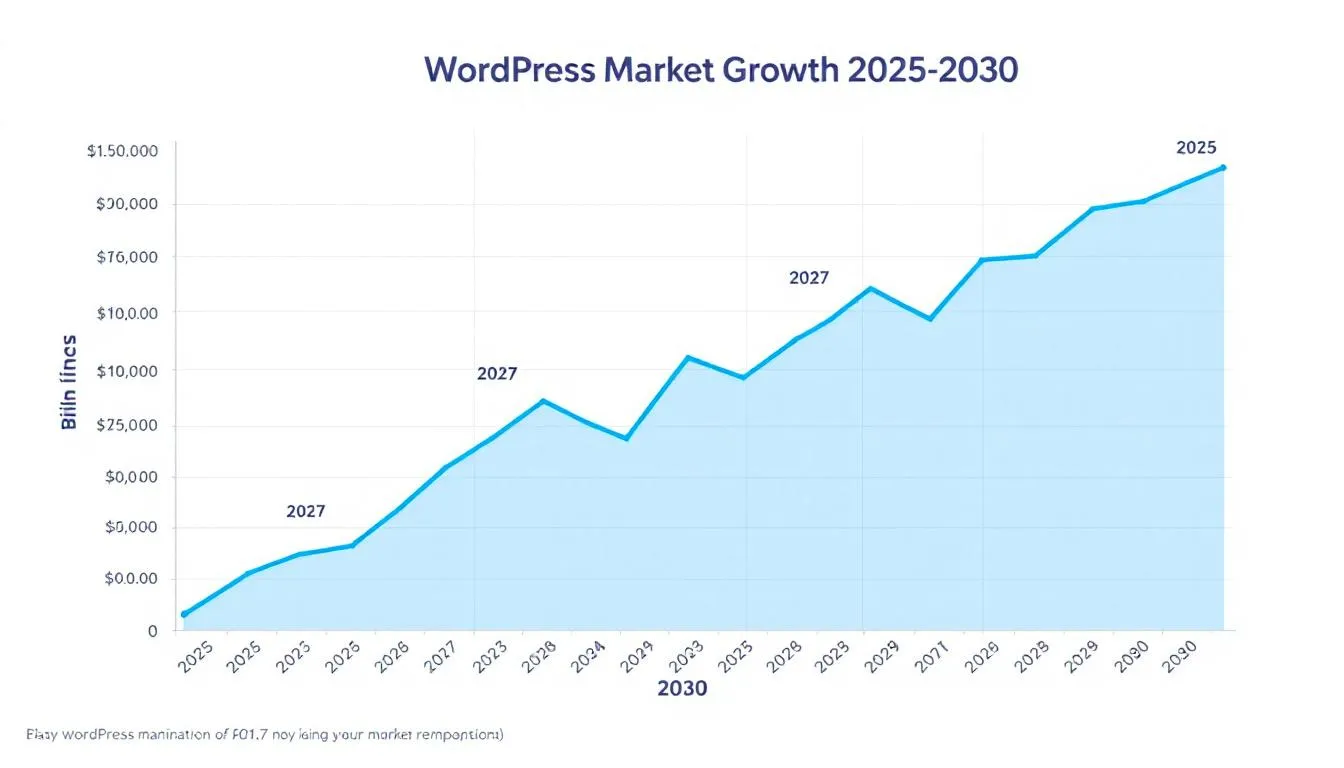
The current market dominance of WordPress is nothing short of remarkable. With over 810 million websites powered by this popular content management system, WordPress continues to outpace competitors by significant margins. The WordPress Foundation reports that the platform’s market share has grown steadily from 35% in 2020 to its current 43%, and projections suggest this growth will continue through 2030.
Industry analysts predict that WordPress websites will reach the 1 billion milestone by 2028, representing an extraordinary achievement for any technology platform. This growth trajectory positions WordPress as not just a blogging tool or simple website builder, but as the foundational infrastructure for the modern web.
The competitive landscape presents both challenges and opportunities. Platforms like Webflow, Shopify, and various no-code solutions are gaining traction, particularly among users seeking simplified website creation. However, WordPress’s vibrant community and extensive plugin ecosystem provide distinct advantages that proprietary platforms struggle to match. The WordPress co-founder Matt Mullenweg has emphasised that the platform’s open-source nature shields users from the vendor lock-in risks that plague proprietary alternatives.
Enterprise adoption continues to accelerate, with Fortune 500 companies increasingly choosing WordPress for their digital infrastructure. The platform’s flexibility to scale from personal blogs to complex enterprise solutions makes it attractive to organisations of all sizes. By 2027, experts predict that over 60% of Fortune 500 companies will use WordPress in some capacity, either for their main websites or subsidiary properties.
Market share predictions for the 2025-2030 period suggest WordPress will maintain its leadership position while expanding into new verticals. The platform’s ability to adapt to emerging technologies like AI and IoT will be crucial in defending against newer, more specialised competitors.
Gutenberg Editor Evolution and Full Site Editing
The Gutenberg editor has fundamentally changed how users interact with WordPress, and the upcoming Phase 4 represents the most ambitious evolution yet. Scheduled for Q2 2025, this major update will introduce real-time collaboration features that rival Google Docs in functionality. Multiple users will be able to edit the same post or page simultaneously, with live cursors and comment systems built directly into the WordPress interface.
The advanced pattern library launching with Phase 4 will leverage machine learning to suggest design elements based on content context. As users type, the system will intelligently recommend relevant blocks, layouts, and design patterns. This AI integration makes the site editing experience more intuitive while maintaining the flexibility that WordPress users expect.
Visual canvas editing capabilities will transform the WordPress dashboard into a design environment similar to Figma or Canva. Users will be able to drag and drop elements with pixel-perfect precision, adjust spacing and alignment visually, and see changes in real-time. This evolution bridges the gap between design tools and content management, making WordPress accessible to creative professionals who previously relied on external design software.
Multi-user editing capabilities will revolutionise how teams and agencies collaborate on WordPress projects. Project managers can assign specific sections to team members, content creators can work simultaneously on different parts of a page, and clients can provide feedback directly within the editor interface. This collaborative approach reduces the traditional back-and-forth of website development.
Integration with design tools like Adobe Creative Suite represents another significant advancement. Users will be able to import designs directly from Photoshop or Illustrator, with Gutenberg automatically converting design elements into editable blocks. This seamless workflow eliminates the traditional design-to-development handoff that often introduces errors and delays.
Block Themes Transformation
The transition from traditional PHP themes to block themes represents one of the most significant changes in WordPress development. By 2027, industry experts predict that classic themes will be largely obsolete, replaced entirely by block-based alternatives that offer superior flexibility and user control.
Currently, over 1,500 block themes are available in the WordPress directory, with this number expected to double by the end of 2025. Theme developers are embracing the block paradigm, creating more sophisticated and flexible designs that users can customise without coding knowledge. These block-based themes provide unprecedented control over every aspect of site design, from headers and footers to complex layouts.
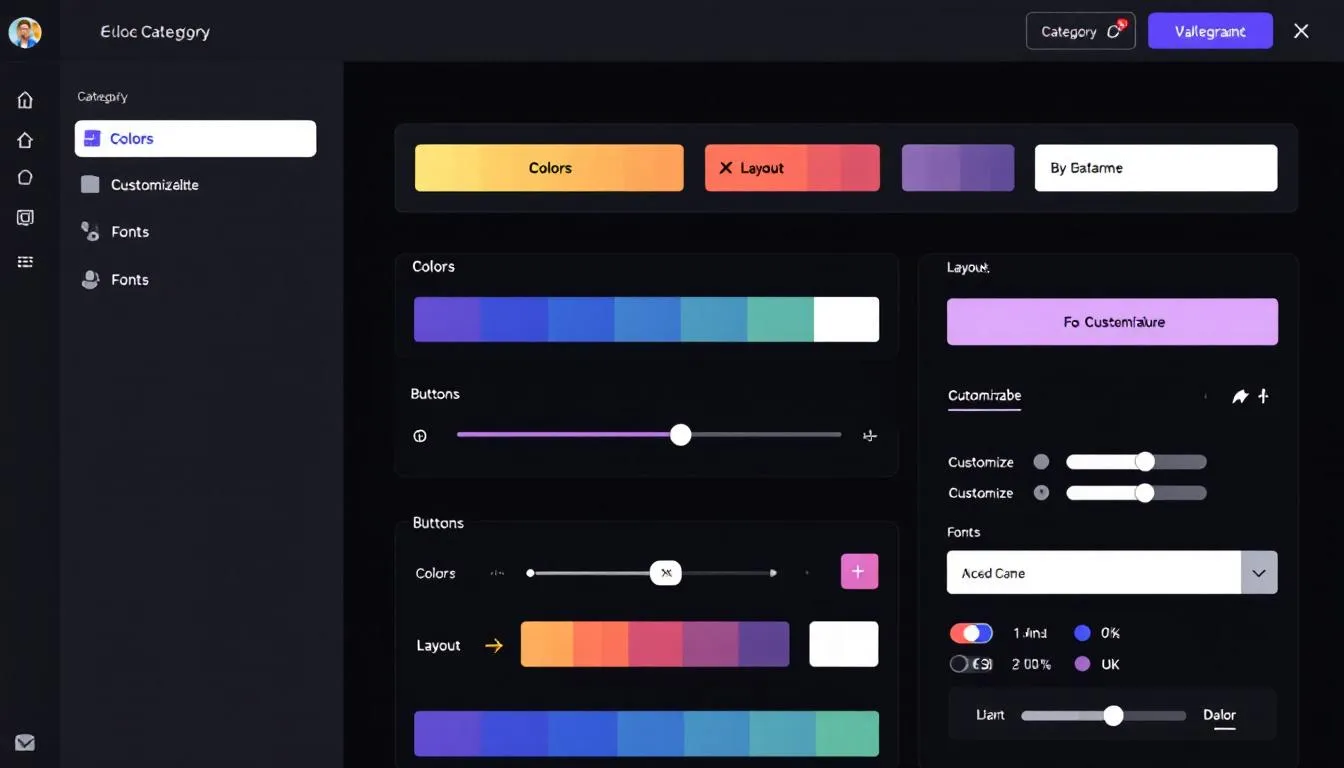
AI-powered theme customisation will become standard by 2026, with systems that can automatically match colours, fonts, and design elements to a brand’s existing materials. Users will upload a logo or brand guidelines, and the AI will suggest comprehensive design modifications that maintain visual consistency across the entire site.
The theme marketplace is evolving to accommodate these changes, with premium block themes commanding higher prices due to their enhanced functionality. Theme developers are focusing on creating comprehensive design systems rather than static templates, providing users with building blocks that can be combined in countless ways.
AI Integration and Machine Learning Features
Artificial intelligence is transforming every aspect of WordPress, from content creation to site management. The WordPress AI toolkit, scheduled for launch with WordPress 6.8 in March 2025, will bring OpenAI and Google Bard integration directly into WordPress core. This integration enables automated content generation, intelligent SEO optimisation, and predictive site management.
Content creators will benefit from AI-powered writing assistance that goes beyond simple grammar checking. The system will analyse existing content patterns, suggest topic ideas, and even generate complete articles based on brief outlines. Advanced features will include automatic meta descriptions generation, intelligent internal linking suggestions, and content optimisation for specific audiences.
Smart SEO optimisation represents a major advancement for website owners who struggle with technical optimisation. The AI system will automatically generate meta descriptions, optimise images with appropriate alt text, and suggest content improvements based on search engine ranking factors. This automation makes professional-level SEO accessible to users without technical expertise.
AI-powered image optimisation extends beyond compression to include automatic format conversion, intelligent cropping for different screen sizes, and automatic alt text generation for accessibility compliance. These features ensure that WordPress sites remain fast and accessible without requiring manual intervention.
The intelligent plugin recommendation system will analyse site behaviour and user interactions to suggest relevant plugins. Instead of browsing through thousands of options, users will receive personalised recommendations based on their specific needs and usage patterns. This system will significantly improve the user experience for newcomers to the WordPress ecosystem.
Predictive performance monitoring and automated issue resolution will transform site management. The AI system will identify potential problems before they affect users, automatically optimise database queries, and even resolve common security issues. This proactive approach reduces downtime and improves overall site reliability.
Headless WordPress and Modern Development
Headless WordPress adoption is experiencing explosive growth, with a 40% annual increase projected through 2027. This architecture decouples the content management backend from the frontend presentation layer, enabling developers to use modern JavaScript frameworks while leveraging WordPress’s robust content management capabilities.
The enhanced REST API and GraphQL integration improvements scheduled for 2025-2026 will make headless implementations more accessible to developers. These updates include better authentication mechanisms, improved caching strategies, and enhanced query optimisation that reduces server load while increasing response speed.
Next.js, Nuxt.js, and React integration are becoming mainstream in the WordPress development community. Major hosting providers like WP Engine now offer specialised headless hosting solutions that optimise for these frameworks. The combination of WordPress’s content management strength with modern frontend technologies creates websites that are both powerful and performant.
Jamstack architecture benefits extend beyond performance to include enhanced security and improved developer experience. By separating the content management layer from the public-facing website, headless WordPress reduces the attack surface and enables advanced caching strategies that can serve content from global content delivery networks.
The developer experience improvements planned for 2025-2026 include enhanced debugging tools, better local development environments, and improved deployment workflows. These enhancements make headless WordPress development more approachable for teams transitioning from traditional WordPress development.
Developer Experience Improvements
WP-CLI 3.0, scheduled for Q4 2025, will introduce advanced automation features that streamline development workflows. These tools will include automated testing frameworks, deployment scripts, and database management utilities, reducing the manual work involved in WordPress development.
Modern PHP 8.3+ support and legacy code elimination by 2026 will improve performance and security while making WordPress development more aligned with contemporary PHP practices. This modernisation effort removes technical debt and enables new features that weren’t possible with older PHP versions.
The improved developer tools and debugging capabilities will include integrated profiling tools, enhanced error reporting, and better integration with modern development environments. These improvements make WordPress development more efficient and help developers identify and resolve issues quickly.
Better local development environments and staging workflows will standardise the development process across different teams and projects. The new tools will include containerised development environments, automated staging deployments, and improved version control integration.

WordPress Ecosystem Performance and Security Enhancements
Core Web Vitals optimisation built into WordPress 6.9, scheduled for September 2025, will automatically optimise websites for Google’s performance metrics. This includes intelligent resource loading, automatic image optimisation, and enhanced caching mechanisms that improve user experience and search engine rankings.
Native lazy loading for all media elements will become standard, reducing initial page load times and bandwidth usage. This feature extends beyond images to include videos, iframes, and other heavy content elements. The implementation will be intelligent, preloading content that users are likely to need while deferring non-critical resources.
Automatic conversion to WebP and AVIF will occur by default, ensuring optimal file sizes without sacrificing quality. The system will automatically serve the best format based on browser support, falling back to traditional formats for older browsers. This optimisation can reduce image file sizes by up to 30% without visible quality loss.
Enhanced security features include two-factor authentication in WordPress core, eliminating the need for third-party plugins for basic security measures. This built-in security will be mandatory for admin accounts on high-value sites and optional for regular users, significantly improving the overall security posture of WordPress installations.
Automated security scanning and vulnerability detection will continuously monitor WordPress sites for potential threats. The system will automatically apply security patches for known vulnerabilities and alert site owners to potential issues before they can be exploited. This proactive approach represents a significant evolution from the reactive security model of the past.
Zero-day security response improvements and automated patching capabilities will enable WordPress to respond to security threats in real time. When critical vulnerabilities are discovered, the system can automatically apply patches without requiring manual intervention, dramatically reducing the window of vulnerability exposure.
WooCommerce and E-commerce Evolution
WooCommerce 9.0, scheduled for Q1 2026, represents a major overhaul of the world’s most popular ecommerce platform. This update will introduce native subscription management and recurring payments, eliminating the need for separate plugins for these essential ecommerce features. The integration with WordPress core will be deeper than ever, creating a seamless experience for both merchants and customers.
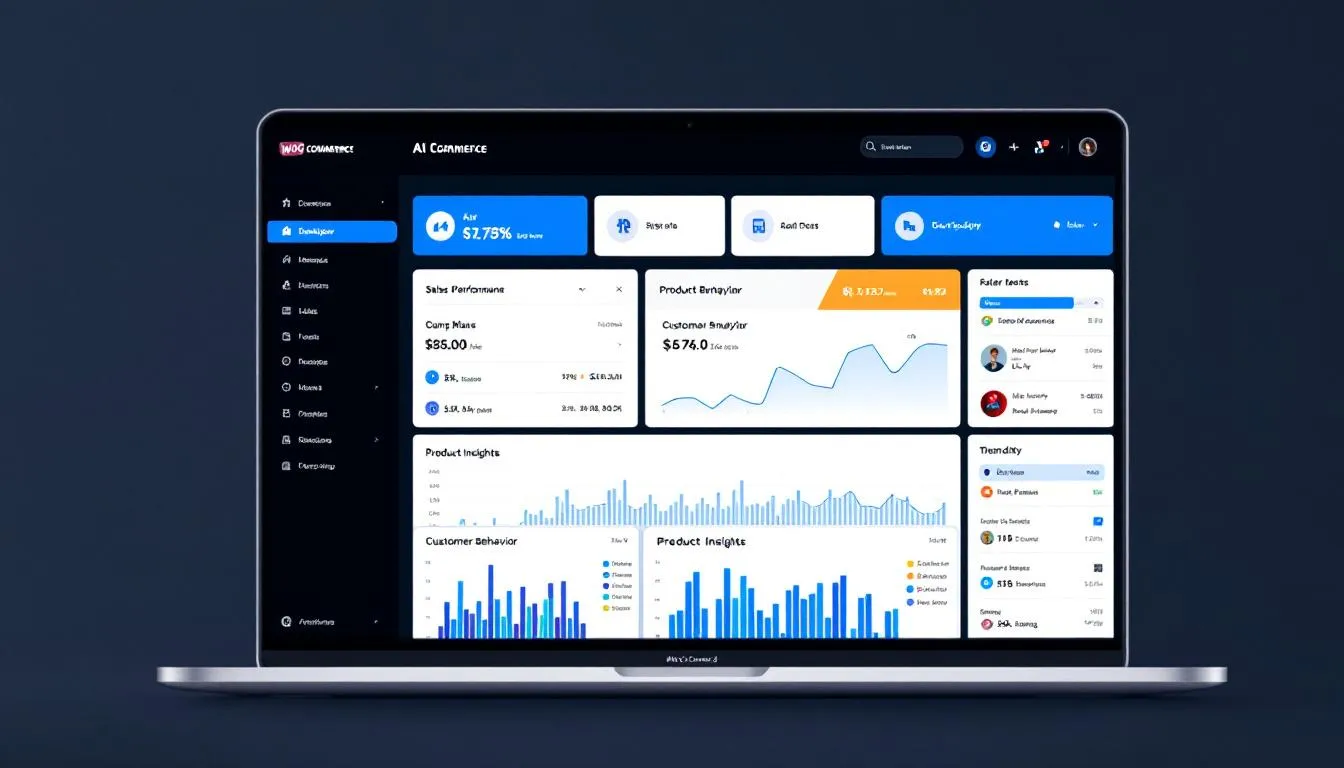
AI-powered product recommendations and personalisation will transform how customers interact with WooCommerce stores. The system will analyse customer behaviour, purchase history, and browsing patterns to suggest relevant products and create personalised shopping experiences. This intelligence extends to pricing strategies, inventory management, and marketing campaigns.
Multi-vendor marketplace capabilities built into WooCommerce core will enable complex marketplace solutions without requiring additional plugins. These features include vendor management, commission structures, and automated payment distribution. This expansion makes WooCommerce competitive with dedicated marketplace platforms while maintaining WordPress’s flexibility.
Cryptocurrency payment integration and Web3 features reflect the growing importance of blockchain technology in e-commerce. WooCommerce will support major cryptocurrencies natively, with automatic conversion rates and integrated wallet management. NFT sales and digital asset management will also be supported, opening new revenue streams for creative businesses.
Advanced analytics and business intelligence tools will provide merchants with deeper insights into their operations. These tools will include predictive analytics for inventory management, customer lifetime value calculations, and automated reporting that helps merchants make data-driven decisions.
Mobile-First and Multi-Platform Experience
Progressive Web App (PWA) support in WordPress core by 2026 will enable websites to function like native mobile apps. This includes offline functionality, push notifications, and app-like navigation that improves mobile user engagement. PWAs created with WordPress will be automatically optimised for performance and user experience across all devices.
Native mobile app creation without coding will democratise mobile app development for WordPress users. The system will automatically generate iOS and Android apps based on WordPress content, with customisable interfaces and functionality. This feature will be particularly valuable for publishers, e-commerce stores, and membership sites.
Voice search optimisation and smart speaker integration will become essential as voice-controlled devices proliferate. WordPress will include built-in schema markup for voice search, optimised content structure for voice queries, and integration with major voice platforms. This optimisation ensures WordPress sites remain discoverable as search behaviour evolves.
Accelerated Mobile Pages (AMP) improvements will focus on better integration with WordPress features while maintaining the performance benefits. The new implementation will support more WordPress functionality while preserving the speed advantages that make AMP valuable for mobile users.
Cross-platform content synchronisation will enable seamless content management across multiple channels. Content created in WordPress will automatically sync to mobile apps, social media platforms, and other digital touchpoints, ensuring consistent messaging across all customer interactions.
Emerging Technology Integration for WordPress Themes
Augmented Reality (AR) and Virtual Reality (VR) content support will position WordPress at the forefront of immersive web experiences. The platform will include native support for AR/VR content creation, 3D model integration, and immersive storytelling tools. This capability will be particularly valuable for e-commerce, education, and entertainment websites.
Blockchain integration for content verification and NFTs will provide new monetisation opportunities for content creators. WordPress will support content authentication, digital ownership verification, and integrated NFT marketplaces. This integration ensures that WordPress remains relevant as the creator economy evolves.
Internet of Things (IoT) device connectivity will enable WordPress to manage content for smart devices, digital signage, and connected products. The platform will include APIs for device communication, real-time data integration, and automated content delivery based on sensor data.
Voice-controlled content management interfaces will allow users to create and edit content using voice commands. This accessibility improvement will be particularly valuable for users with mobility limitations and will streamline content creation workflows for all users.
Machine learning for automated content curation will help manage large content libraries by automatically categorising, tagging, and organising content. The system will learn from user behaviour and preferences to improve content discovery and site navigation.
Community and Ecosystem Development
WordPress Contributor Day expansion to 50+ cities by 2026 reflects the platform’s commitment to global community development. These events will focus on bringing new contributors into the WordPress project, with specialised tracks for different skill levels and interests. The expansion will include underrepresented regions and will provide resources in multiple languages.
Enhanced diversity and inclusion initiatives will ensure that the WordPress community reflects the global diversity of its users. These programs will include mentorship opportunities, scholarship programs, and leadership development initiatives designed to create more inclusive participation in the WordPress project.
Developer certification programs and skill validation will provide standardised credentials for WordPress professionals. These certifications will cover different aspects of WordPress development, from basic site building to advanced plugin development. The program will help employers identify qualified developers and provide career advancement opportunities for WordPress professionals.
Plugin marketplace improvements and quality standards will enhance the user experience while maintaining the open nature of the WordPress ecosystem. The new standards will include automated security scanning, performance testing, and code quality assessments. These improvements will help users make informed decisions about plugin selection while encouraging best practices among developers.
Community-driven feature development processes will formalise how community input shapes WordPress development priorities. This includes regular surveys, feature proposal systems, and community voting on development priorities. The process ensures that WordPress’s evolution reflects the needs of its diverse user base.
Industry-Specific Solutions and Verticals
Healthcare and HIPAA-compliant WordPress solutions will address the growing need for secure medical websites and patient portals. These solutions will include built-in compliance features, encrypted data storage, and audit trails that meet healthcare regulatory requirements. The platform will support telemedicine, patient management, and medical record integration.
Education sector tools and learning management integration will position WordPress as a comprehensive platform for educational institutions. Features will include student information systems, course management, online testing capabilities, and integration with popular learning management systems. These tools will support both traditional and online education models.
Financial services and PCI compliance features will enable WordPress to serve the banking and financial sector securely. The platform will include enhanced security measures, compliance reporting, and integration with financial service APIs. These features will support everything from simple business websites to complex financial applications.
Government and accessibility standard compliance will ensure that WordPress meets the stringent requirements of public sector websites. This includes enhanced accessibility features, security protocols, and transparency tools required for government use. The platform will support citizen services, public information dissemination, and government transparency initiatives.
Non-profit and fundraising platform enhancements will provide specialised tools for charitable organisations. Features will include donation processing, volunteer management, grant tracking, and impact reporting. These tools will be integrated with popular fundraising platforms and will support various fundraising models.
Challenges and Potential Obstacles
Competition from no-code platforms and visual builders presents an ongoing challenge for WordPress. Platforms like Webflow, Wix, and emerging AI-powered website builders offer simplified user experiences that appeal to non-technical users. WordPress must balance ease of use with the flexibility and power that distinguish it from these alternatives.
Legacy code, technical debt, and backward compatibility concerns will continue to challenge WordPress development. The platform must modernise its codebase while maintaining compatibility with existing themes and plugins. This balance is crucial for maintaining the trust of the WordPress community while enabling innovation.
Security concerns and vulnerability management remain critical challenges as WordPress’s popularity makes it an attractive target for attackers. The platform must continuously evolve its security measures while educating users about best practices. The open-source nature that provides WordPress’s strength also creates security challenges that require ongoing attention.
Performance optimisation for large-scale sites will become increasingly important as WordPress sites grow in complexity and traffic. The platform must provide better caching mechanisms, database optimisation, and scaling solutions that enable WordPress to compete with specialised high-performance platforms.
The developer learning curve for new technologies presents both opportunities and challenges. As WordPress incorporates AI, headless architecture, and modern development practices, developers must acquire new skills. The WordPress community must provide education and resources to support this transition.
Trademark and legal challenges affecting the WordPress ecosystem continue to create uncertainty for businesses built on the platform. The ongoing disputes between WordPress.org and WP Engine highlight the complex legal landscape surrounding open-source platforms and commercial services.

Predictions for The Future of WordPress Content Management System in 2030
By 2030, WordPress will feature fully AI-powered content management with natural language interfaces that allow users to create and manage websites through conversational commands. Users will be able to describe their desired website functionality in plain language, and the AI will generate the necessary code, content, and design elements automatically.
Seamless integration with Web3 and decentralised technologies will position WordPress at the forefront of the decentralised web. The platform will support decentralised hosting, blockchain-based content verification, and cryptocurrency-native commerce solutions. This integration will provide new models for content ownership and monetisation.
Voice-first content creation and management will become standard, with users able to create blog posts, update content, and manage their sites entirely through voice commands. This accessibility improvement will open WordPress to new user groups and streamline content creation workflows.
Quantum computing optimisation for large-scale deployments will enable WordPress to handle massive traffic loads and complex calculations that are impossible with current technology. This advancement will particularly benefit enterprise users and high-traffic websites that require extreme performance.
Autonomous website maintenance and self-healing systems will eliminate most manual maintenance tasks. WordPress sites will automatically update content, optimise performance, fix security issues, and even redesign themselves based on user behaviour and performance metrics.
The platform will achieve complete no-code capability while maintaining developer flexibility, enabling anyone to create sophisticated websites without technical knowledg,e while providing developers with the tools they need for complex custom solutions.
The Future of WordPress: FAQ
Will WordPress remain relevant in the next 10 years?
Yes, WordPress is positioned to remain the dominant content management system through 2030 and beyond. Its open-source nature provides protection against vendor lock-in risks that affect proprietary platforms, while continuous innovation in AI, headless architecture, and emerging technologies ensures it stays current with web development trends. The platform’s 43% market share and vibrant community provide a strong foundation for continued growth.
How will AI change WordPress development and content creation?
AI will revolutionise WordPress by automating content creation, providing intelligent design suggestions, and enabling natural language site management. By 2027, users will be able to create entire websites through conversational interfaces, while developers will benefit from AI-powered code generation and automated testing. Content creators will have AI assistants for writing, SEO optimisation, and multimedia creation.
What are the biggest upcoming changes in WordPress 6.8 and beyond?
WordPress 6.8 will introduce the official AI toolkit with integrated content generation capabilities. Subsequent versions will bring real-time collaboration features, enhanced headless architecture support, and comprehensive performance optimisations. Full site editing will mature significantly, and the transition from PHP themes to block themes will accelerate through 2026-2027.
Is headless WordPress worth learning for developers?
Absolutely. Headless WordPress adoption is growing 40% annually and will triple by 2028. This architecture enables faster websites, better user experiences, and greater flexibility for complex applications. Developers who master headless WordPress will be well-positioned for enterprise projects and modern web development opportunities that leverage JavaScript frameworks.
How will WordPress compete with no-code platforms like Webflow?
WordPress will compete by combining the simplicity of no-code platforms with the power and flexibility of open-source development. AI-powered site builders will enable non-technical users to create sophisticated websites, while the extensive plugin ecosystem and community support provide capabilities that proprietary platforms cannot match. The lack of vendor lock-in and lower long-term costs also provide competitive advantages.
Take your business to the next level with a Pixel Fish Website.
Check out some of our latest Website Design projects.
Further Information
Discover What is WordPress: A Complete Beginner’s Guide
Top WordPress Web Designers: Expert WordPress Developers
4 Essentials of E-Commerce Website Design that Converts
How to Build the Perfect E-Commerce Checkout Experience
Top WordPress Web Design Agency Services for 2025