
Turning Website Visitors into Paying Customers: Lead Conversion Key Takeaways
- Only 2-3% of website visitors typically convert on their first visit, making conversion optimisation crucial for business growth
- First impressions within 0.05 seconds determine whether visitors stay or leave, making above-the-fold optimisation essential
- Personalised experiences can increase conversion rates by up to 19%, while strategic pop-up timing can capture 35% more leads
- Abandoned cart recovery emails have a 45% open rate and can recover 10-15% of lost sales when properly implemented
- Live chat support increases conversions by 12% on average and provides instant gratification that modern consumers expect
Every day, thousands of potential customers visit your website, browse your products, and leave without buying anything; this is the challenge of how to effectively convert visitors. If you’re like most business owners, this scenario keeps you awake at night. You’re investing heavily in driving web traffic through SEO, paid advertising, and social media marketing, but your conversion rates remain stubbornly low.
The hard truth is that attracting website visitors is only half the battle. The real challenge lies in turning those website visitors into paying customers. With average conversion rates hovering between 2-3% across industries, 97% of your web traffic is walking away empty-handed, highlighting the need to capture leads more effectively. That’s a massive opportunity for growth that most businesses are missing.
In this comprehensive guide, we’ll explore ten proven strategies for converting website visitors into customers. These aren’t theoretical concepts – they’re battle-tested techniques backed by real data and used by successful companies to maximise conversions and drive sustainable growth.
Understanding Your Conversion Challenges
Before diving into solutions, it’s crucial to understand why most website visitors don’t convert. Market research reveals that 96% of website visitors leave without taking any desired action, whether that’s making a purchase, signing up for a newsletter, or requesting a demo. This isn’t necessarily a reflection of poor products or services – it’s often about addressing fundamental user behaviour patterns and pain points in the buying process.
The average cost of acquiring new website visitors through paid advertising continues to rise across all industries. Google Ads costs have increased by 15% year-over-year, while Facebook advertising costs have risen by 12%. This makes conversion rate optimisation more critical than ever in order to maximise website traffic . Instead of spending more money to generate leads and drive more visitors to your site, smart businesses focus on converting a higher percentage of their existing web traffic.
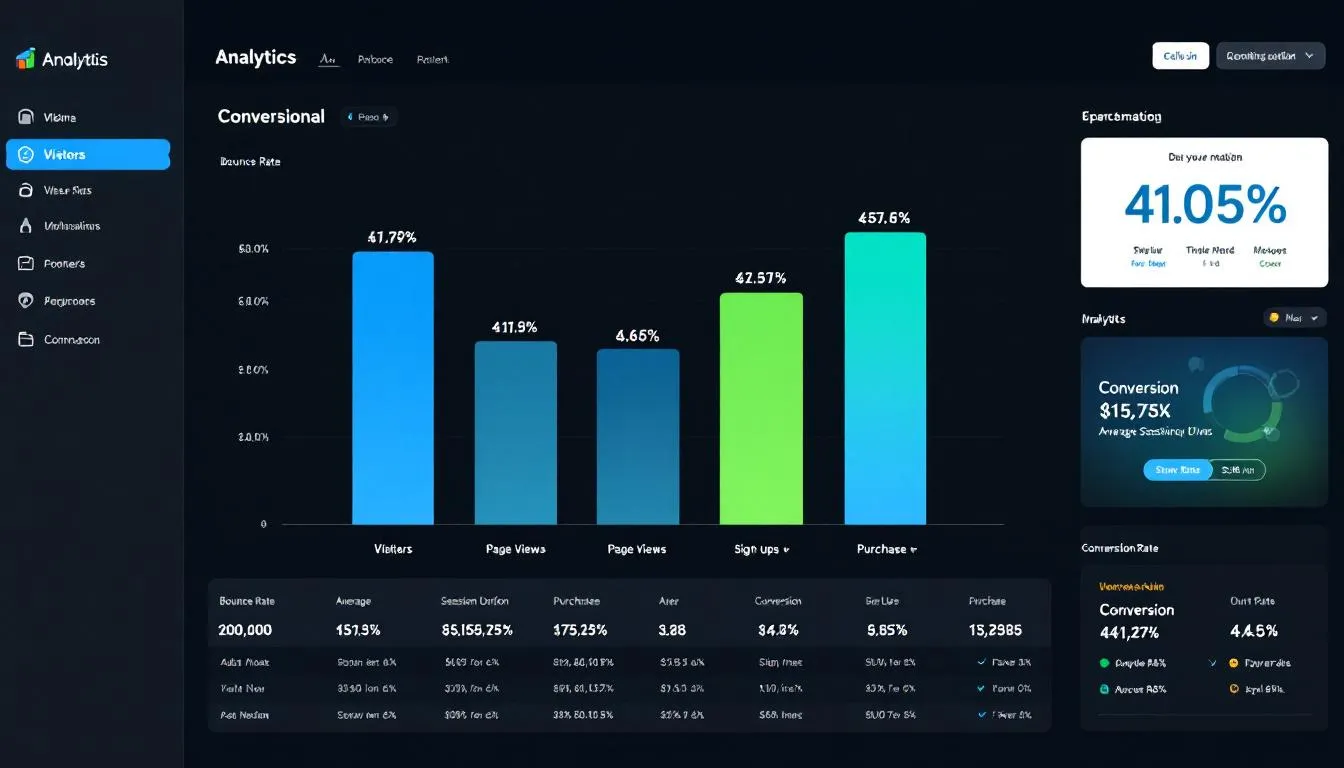
The difference between traffic generation and conversion optimisation is profound. Traffic generation brings new visitors to your website, but conversion optimisation transforms those visitors into revenue. A business that increases its conversion rate from 2% to 4% effectively doubles its revenue without acquiring a single additional visitor. This compound effect makes conversion optimisation one of the highest ROI activities any business can pursue, as it leads to more conversions .
Common conversion challenges include unclear value propositions that fail to communicate benefits clearly, friction points in the buying process that create unnecessary barriers, a poor mobile experience that frustrates smartphone users, poor user experience a lack of social proof that undermines credibility, and inadequate customer support during critical decision-making moments.
Optimising First Impressions for Immediate Impact to Convert Website Visitors into Customers
Research shows that visitors form judgments about your website within 50 milliseconds of landing on a page. This means you have less than the blink of an eye to make a positive first impression. The critical 3-second rule determines whether visitors stay engaged or immediately bounce to other websites.
During these crucial first moments, visitors subconsciously evaluate your site’s credibility, relevance, and value. Poor design, slow loading times, or confusing messaging triggers an immediate flight response. Conversely, websites that quickly communicate their value proposition and present a professional appearance dramatically improve their chances of capturing and holding visitor attention, as they also manage to address concerns effectively .
Clear Value Proposition Above the Fold
Your value proposition is the single most important element on your homepage. It should immediately answer three critical questions that every visitor has: What do you offer? How does it benefit me? Why should I choose you over competitors?
Effective value propositions focus on benefits rather than features. Instead of listing what your product does, explain how it solves specific pain points your target audience faces. Companies like Slack revolutionised business communication by positioning themselves as a solution to email overload, not just another messaging platform.
The optimal placement for your value proposition is above the fold, typically in a large headline followed by a supporting subheading. Your primary call to action should appear immediately below this messaging, creating a natural flow from interest to action, ultimately leading to more paying clients . Support your value proposition with relevant visual elements that reinforce your message rather than distract from it.
Consider how Dropbox’s simple “Your stuff, anywhere” headline immediately communicates the core benefit of file synchronisation across devices. This clarity helps potential customers quickly understand the value and decide whether to explore further.
Page Speed and Mobile Experience
- Page speed – directly impacts conversion rates, with 40% of visitors abandoning sites that take longer than 3 seconds to load. Every additional second of loading time can reduce conversions by up to 7%. For e-commerce sites, this translates to significant lost sales, especially considering that mobile devices now account for over 60% of all web traffic.
- Technical improvements – that boost page speed include image compression to reduce file sizes without sacrificing quality, implementing a content delivery network (CDN) to serve content from servers closer to your visitors, minifying CSS and JavaScript code to eliminate unnecessary characters, and enabling browser caching to store frequently accessed files locally.
- Mobile optimisation – extends beyond page speed to include responsive design that adapts to different screen sizes, thumb-friendly navigation that accounts for touch interaction, and simplified checkout processes that reduce friction on smaller screens. Poor mobile experience drives away potential customers before they have a chance to engage with your content or products.
- Tools – like GTmetrix, Google PageSpeed Insights, and Pingdom provide detailed analysis of your site’s performance and specific recommendations for improvement. Regular monitoring ensures your site maintains optimal speed as you add new content and features.
Strategic Lead Capture Techniques
Not all visitors are ready to make an immediate purchase decision. Strategic lead capture allows you to stay connected with potential customers who need more time to evaluate your offering. The key is implementing progressive lead capture that matches the visitor’s current level of interest and intent.
Different capture methods work at various stages of the customer journey. Early-stage visitors might be willing to download educational content in exchange for their email address, while visitors who have viewed pricing pages might respond to free trial offers or personalised demos.
Smart Popup Capture Forms Implementation
Despite their reputation for being annoying, well-designed popups can capture 10-15% more leads when implemented strategically. The secret lies in timing, targeting, and offering genuine value to visitors.
Exit-intent popups appear when visitors show signs of leaving your site, such as moving their mouse toward the browser’s close button. These pop-ups capture visitors who would otherwise leave without taking any action. Scroll-based triggers activate when visitors reach 25% scroll depth, indicating genuine engagement with your content. Time-based triggers wait 30-60 seconds before appearing, allowing visitors to explore your site first.
High-converting pop-up offers include free shipping promotions that can increase conversions by 30%, discount codes for first-time customers, and exclusive content downloads that provide immediate value. The key is ensuring your pop-up offer aligns with the visitor’s current needs and interests.
Design best practices include using contrasting colours that draw attention without being overwhelming, providing clear close buttons that respect user choice, ensuring mobile responsiveness for all device types, and including social proof elements that reinforce credibility.
Optimised Contact Forms for Email Campaigns
Research shows that each additional form field reduces conversions by 11%. This means that lengthy contact forms create unnecessary barriers between potential customers and your business. The most effective lead capture forms request only essential information: name, email address, and perhaps one qualifying question for top-funnel offers.
Progressive profiling allows you to gather additional information over time rather than overwhelming visitors with lengthy initial forms. As subscribers engage with your content and demonstrate increasing interest, you can request additional details that help you provide more personalised experiences.
Form optimisation tactics include inline validation that shows real-time feedback as visitors type, clear error messages that help users correct mistakes quickly, and social proof elements near submission buttons that reinforce the value of taking action. Consider placing customer testimonials or subscriber counts near your forms to reduce hesitation.
Exit-Intent Strategies
Exit-intent technology detects subtle mouse movements that indicate when users are about to leave your site. This creates a final opportunity to capture their attention and provide value before they navigate away.
Effective exit-intent offers include free trials that allow visitors to experience your product without commitment, discount codes that create immediate incentive to purchase, and exclusive deals that keep your brand top-of-mind. The key is matching your offer to the visitor’s demonstrated level of interest.
A/B testing different exit-intent messages and timing helps optimise performance. Some businesses see success with urgent messaging that creates scarcity, while others perform better with helpful resources that provide additional value. Success stories show a 35% reduction in bounce rates with properly implemented exit-intent campaigns.
Building Trust and Credibility for Effective Lead Capture
Trust issues cause 18% of cart abandonments, making credibility building essential for converting website visitors into customers. Online shoppers need reassurance that your business is legitimate, your products deliver promised benefits, and their personal information will be protected.
The psychology of trust signals operates on both conscious and subconscious levels. While visitors may not explicitly think about security badges or customer testimonials, these elements significantly influence their comfort level with making a purchase decision.
Social Proof Integration
Social proof leverages the psychological principle that people look to others’ behaviour when making decisions. Effective social proof includes customer testimonials with photos and names, detailed case studies showing specific results, and client logos from recognisable brands.
Strategic placement maximises social proof impact. Position testimonials near call-to-action buttons, include case studies on product pages where purchase decisions are made, and display client logos prominently on your homepage. The goal is to provide reassurance at moments when visitors might hesitate.
Collecting authentic social proof requires systematic outreach to satisfied customers. Post-purchase email sequences can request reviews and testimonials, while user-generated content campaigns encourage customers to share their experiences on social media. The key is making it easy for happy customers to share their positive experiences.
Studies show that social proof can increase conversions by 34% for e-commerce sites. The impact is particularly strong for high-consideration purchases where customers need additional reassurance before committing.
Security and Trust Signals
Essential trust signals include SSL certificates that encrypt data transmission, payment security icons from providers like PayPal and Stripe, and industry certifications that demonstrate expertise. These signals should be prominently displayed on checkout pages, contact forms, and footer areas where visitors naturally look for credibility indicators.
Money-back guarantees and clear return policies significantly reduce purchase anxiety. When customers know they can return products if unsatisfied, they’re much more likely to complete initial purchases, which sets the stage for future purchases. The psychological impact of guarantees often outweighs the actual return rate, making them valuable conversion tools.
Trust signal optimisation has shown dramatic results across industries. Financial services companies have seen conversion increases of 42% after implementing comprehensive trust signal strategies. The key is systematically addressing every potential concern that might prevent a visitor from becoming a paying customer.
Personalisation and User Experience
Research indicates that 80% of consumers prefer personalised experiences, and personalisation can increase average order value by 19%. Modern website visitors expect content and offers tailored to their specific interests and needs, with more than half preferring a personalised experience.
Effective personalisation requires understanding visitor behaviour patterns, preferences, and intent. This involves tracking interactions across multiple sessions and touchpoints to build comprehensive user profiles that inform content delivery decisions.
Dynamic Content Delivery
Dynamic content adapts based on visitor characteristics such as geographic location, traffic source, browsing history, and past interactions. Examples include location-based offers that highlight nearby store locations or local shipping options, industry-specific case studies that resonate with business visitors, and product recommendations based on previous purchases or browsing behaviour.
Implementation tools like Google Optimise, Optimizely, and HubSpot enable businesses to create sophisticated personalisation campaigns without extensive technical expertise. These platforms provide segmentation capabilities that group visitors based on shared characteristics and serve targeted content accordingly.
Segmentation strategies should consider traffic source (organic search visitors have different intent than social media visitors), geographic location (regional preferences and regulations vary), and behavioural indicators (pricing page visits suggest high purchase intent). The goal is to deliver the most relevant experience possible for each visitor segment.
Case studies demonstrate a significant impact from content personalisation. E-commerce companies have seen 25% conversion improvements by showing products related to previous purchases and browsing history. B2B companies achieve similar results by presenting industry-specific content and case studies.
Behavioral Targeting
Behavioural targeting analyses user actions to predict intent and deliver relevant messaging. Key behaviours to track include page visit patterns, time spent on specific sections, interaction with product features, and response to previous marketing messages.
Trigger-based messaging responds to specific behaviours in real-time. Visitors who view multiple products might receive recommendations for related items. Those who spend significant time on pricing pages could see targeted discount offers. Demo request page visitors might get immediate offers for personalised consultations.
Implementation requires analytics tools like Hotjar for heatmap analysis, CrazyEgg for click tracking, and Google Analytics 4 for comprehensive behavioural data. These platforms reveal how visitors interact with your site and identify opportunities for behavioural triggers.
Examples of effective behavioural campaigns include cart abandonment sequences that remind customers about items they’ve viewed, re-engagement offers for visitors who haven’t returned in 30 days, and VIP upgrade offers for high-value customers based on past purchase history.
Proactive Customer Support
Live chat increases conversions by 12% on average and improves customer satisfaction by 73%. Modern consumers expect immediate answers to their questions, especially when considering significant purchases.
The ROI of live chat implementation extends beyond direct sales impact. Reduced support costs, improved customer lifetime value, and enhanced brand perception contribute to overall business growth. Companies report that chat support often pays for itself through increased conversion rates alone.
Live Chat Implementation
Effective chat triggers include time-based activation after visitors spend 30 seconds on key pages, specific page visits such as pricing or checkout pages, and scroll depth triggers that activate when visitors reach important sections. The goal is to offer help at moments when visitors might have questions or concerns.
Training requirements for chat agents include comprehensive product knowledge, response time goals under 30 seconds, and clear escalation procedures for complex issues. Agents should be empowered to offer discounts or expedited shipping to close sales when appropriate.
Integration with CRM systems ensures a seamless customer experience and proper lead tracking. When chat conversations connect with broader customer profiles, agents can provide more personalised assistance and better understand visitor needs.
Proactive chat messages perform better than reactive approaches. Instead of waiting for visitors to initiate contact, strategic proactive messages like “Need help finding the right product?” or “Have questions about pricing?” can increase engagement by 40%, complemented by effective retargeting ads .
AI-Powered Assistance
Chatbots handle common questions, qualify leads, and provide 24/7 support when human agents aren’t available. The key is knowing when to use bots versus human agents based on query complexity and customer value.
Effective chatbot flows include product recommendation sequences that guide visitors to relevant solutions, troubleshooting assistance that resolves common issues quickly, and appointment scheduling that connects high-intent visitors with sales representatives.
Implementation tools like Intercom, Drift, and Zendesk Chat provide sophisticated bot-building capabilities with easy integration into existing websites. These platforms offer templates for everyday use cases and analytics to optimise bot performance over time.
The most successful implementations combine AI efficiency with human expertise. Bots handle routine questions and initial qualification, then seamlessly transfer complex issues to human agents who can provide personalised assistance.
Abandoned Cart Recovery Systems
Cart abandonment affects every e-commerce business, with an average rate of 69.99% across all industries. However, recovering even 10% of abandoned carts can significantly impact revenue without requiring additional traffic acquisition costs.
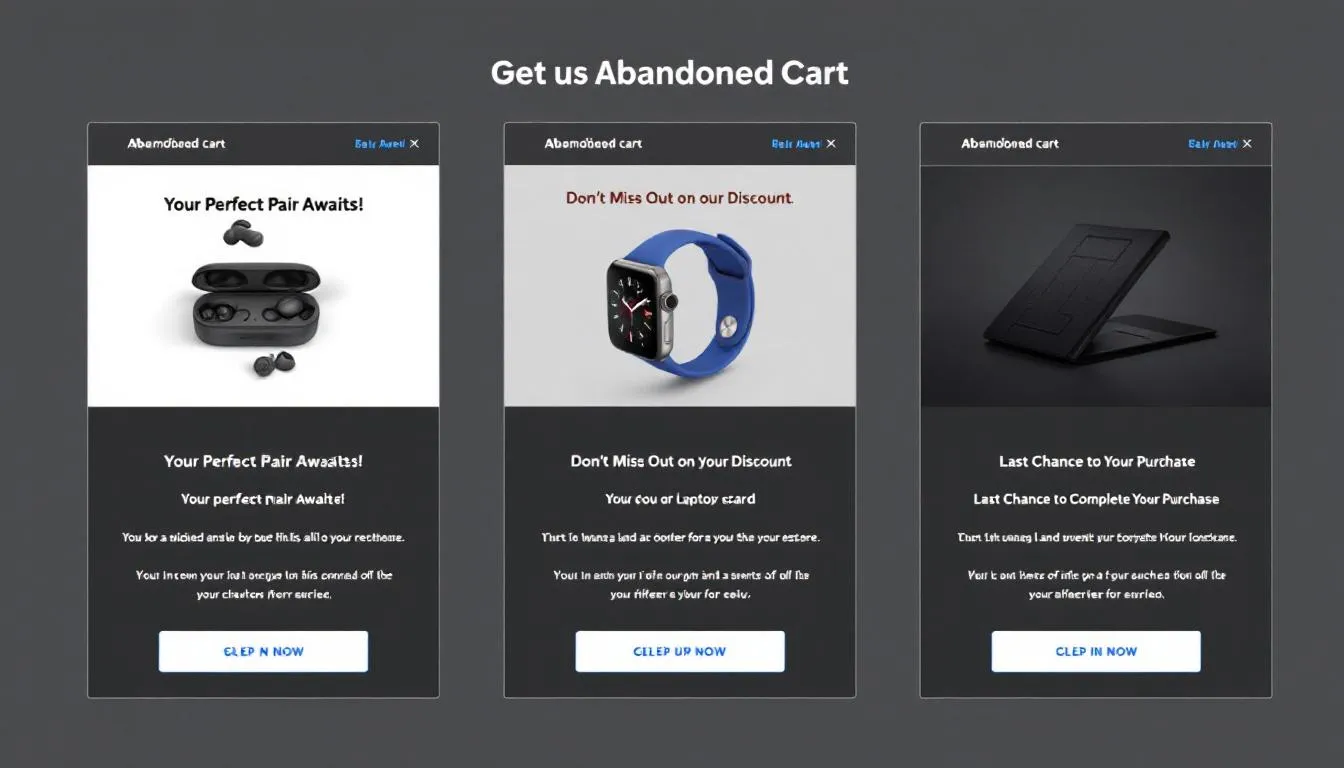
The psychology behind cart abandonment includes comparison shopping, unexpected costs at checkout, complicated purchase processes, and simple distraction. Understanding these motivations helps design effective recovery strategies.
Automated Email Sequences
Optimal timing for cart abandonment emails follows a proven pattern: first email within 1 hour achieves 29% open rates, second email after 24 hours maintains engagement, and third email after 3 days provides the final opportunity for recovery.
Email content strategies should include high-quality product images that remind customers what they’re considering, social proof elements that reinforce purchase decisions, and subtle urgency messaging that encourages prompt action. Personalisation tactics like including customer names and specific product details improve response rates significantly.
A/B testing approaches help optimise subject lines, send times, and email frequency. Some customers respond better to direct product reminders, while others prefer educational content about product benefits. Testing reveals which approaches work best for your specific target audience.
Studies show that well-executed abandonment email sequences achieve 15.6% average recovery rates. When combined with strategic incentives, some businesses recover up to 25% of abandoned carts.
Incentive Strategies
Discount offers should be used strategically to avoid devaluing products or training customers to expect constant promotions. Alternative incentives include free shipping, expedited delivery options, and bonus products that add value without reducing prices.
Progressive incentive strategies increase offers with each follow-up email. The first email might highlight product benefits, the second could offer free shipping, and the third might include a modest discount. This approach tests price sensitivity while maximising recovery opportunities.
Case studies show that incentive-based campaigns achieve higher recovery rates than standard reminders. However, businesses must balance short-term conversion gains with long-term brand perception and profit margins.
Email Marketing for Conversion
Email marketing delivers $42 return for every $1 spent, making it one of the highest ROI marketing channels available. The key to success lies in nurturing leads through the customer journey with relevant, valuable content.
Segmentation strategies maximise relevance and conversion rates by grouping subscribers based on shared characteristics and behaviours. This allows for highly targeted messaging that addresses specific needs and interests.
Welcome Series
Welcome email sequences introduce new subscribers to your brand while delivering immediate value. A typical 5-7 email sequence includes brand introduction and company story, social proof and customer success stories, product education and feature highlights, special offers for new subscribers, and community invitation or engagement opportunities.
Optimal timing begins with the first email within 15 minutes of signup to capitalise on initial interest. Subsequent emails follow at 3-day intervals to maintain engagement without overwhelming subscribers. This cadence allows for consistent touchpoints while respecting subscriber preferences.
Setting proper expectations in welcome emails reduces unsubscribe rates and improves long-term engagement. Clearly communicate how often you’ll send emails, what type of content subscribers can expect, and easy unsubscribe options that demonstrate respect for their preferences.
Welcome series emails achieve 50% higher engagement rates than standalone promotional emails. This elevated engagement carries forward throughout the subscriber relationship, leading to more loyal customers, making welcome sequences crucial for long-term email marketing success.
Segmentation Strategies
Effective segmentation considers purchase history to identify high-value customers and frequent buyers, engagement level to distinguish active subscribers from those who rarely open emails, demographic data to personalise content for different target audience segments, and behavioural triggers that indicate specific interests or needs.
Segment-specific campaigns include win-back sequences for inactive subscribers, VIP programs for high-value customers, product education series for recent purchasers, and exclusive previews for engaged subscribers. Each segment receives content designed specifically for their current relationship with your brand, which could include a tailored blog post .
Dynamic segmentation adjusts automatically based on changing customer behaviour. Subscribers move between segments as their engagement levels change, ensuring they always receive the most relevant content for their current status.
Advanced segmentation tools like Mailchimp, Klaviyo, and HubSpot provide sophisticated targeting capabilities with automation features that manage segment transitions seamlessly.
Conversion Rate Optimisation Through Testing
Systematic testing improves conversion rates by 20-30% on average through data-driven optimisation decisions. The key is implementing a proper testing methodology that produces statistically significant results you can trust.
Testing prioritisation should focus on elements with the highest potential impact and easiest implementation. Homepage headlines and call-to-action buttons often provide quick wins, while complex checkout flow changes require more resources but can yield substantial improvements.
A/B Testing Framework
Elements to test include headlines that communicate value propositions, call-to-action button text and colours, form field requirements and layouts, page layouts and content organisation, and pricing presentation and package options. Each test should focus on a single element to isolate the impact of specific changes.
Minimum sample size requirements depend on current traffic levels and conversion rates. Generally, you need at least 1,000 visitors per variation and 100 conversions total to achieve statistical significance. Testing duration should allow for weekly patterns and seasonal fluctuations that might affect results.
Hypothesis formation guides effective testing by predicting specific outcomes based on user behaviour insights. For example, “Reducing form fields from 5 to 3 will increase signups by 15% because visitors find shorter forms less intimidating.”
Testing tools like Google Optimise, Optimizely, and VWO provide user-friendly interfaces for creating and managing experiments. These platforms handle traffic splitting, statistical analysis, and results reporting automatically.
Analytics and Data Analysis
Key metrics extend beyond simple conversion rates to include bounce rate, average session duration, customer lifetime value, and revenue per visitor. This comprehensive view reveals the full impact of optimisation efforts on business performance.
Google Analytics 4 setup requires proper conversion tracking configuration, goal definition for different visitor actions, and custom dashboard creation for monitoring key metrics. Advanced features like enhanced e-commerce tracking provide detailed insights into customer behaviour patterns.
Custom dashboards should highlight metrics most relevant to your business objectives. E-commerce sites might focus on average order value and cart abandonment rates, while service businesses prioritise lead generation and consultation bookings.
Data-driven insights often reveal unexpected optimisation opportunities. For example, discovering that mobile visitors have significantly lower conversion rates might prompt mobile experience improvements that dramatically impact overall performance.
Turning Website Visitors into Paying Customers: FAQ
What’s the average website conversion rate, and how do I compare to industry benchmarks?
Average conversion rates vary significantly by industry, but most websites see 2-3% conversion rates. E-commerce sites typically convert at 2.86%, while lead generation sites average 2.35%. Software and SaaS companies often achieve higher rates of 3-5%. However, top-performing sites in any industry can achieve conversion rates of 10% or higher through systematic optimisation. Focus on improving your own baseline rather than obsessing over industry averages.
How long should I run A/B tests to get statistically significant results?
A/B tests should run for a minimum of one week to account for daily traffic patterns, but most tests need 2-4 weeks to reach statistical significance. You need at least 1,000 visitors per variation and 100 total conversions to trust your results. Avoid stopping tests early, even if you see promising results, as this can lead to false conclusions. Use significance calculators to determine when you have enough data to make confident decisions.
Which conversion optimisation tactics should I implement first for the biggest impact?
Start with your homepage value proposition and primary call-to-action buttons, as these affect every visitor. Next, optimise your checkout process or lead capture forms to reduce friction. Then implement exit-intent popups and basic email capture strategies. Finally, add social proof elements and trust signals throughout your site. This sequence addresses the highest-impact areas first while building toward more sophisticated optimisation strategies.
How do I measure the ROI of conversion rate optimisation efforts?
Calculate ROI by comparing the additional revenue generated from higher conversion rates against optimisation costs. For example, if you increase conversions from 2% to 3% with 10,000 monthly visitors and $100 average order value, you generate an additional $10,000 monthly revenue. If optimisation costs $2,000, your monthly ROI is 400%. Track metrics like revenue per visitor, customer lifetime value, and cost per acquisition to measure comprehensive impact.
What are the most common conversion killers that I should avoid on my website?
The biggest conversion killers include slow page loading speeds (over 3 seconds), unclear value propositions that don’t communicate benefits, complicated checkout processes with too many steps, lack of trust signals like security badges and customer reviews, poor mobile experience that frustrates smartphone users, hidden costs that appear late in the purchase process, and weak or missing call-to-action buttons. Audit your site regularly for these issues and prioritise fixes based on their impact on user experience.
Take your business to the next level with a Pixel Fish Website.
Check out some of our latest Website Design projects.
Further Information
5 Characteristics for Effective Web Design for Inbound Marketing
Tips for Optimising Your WooCommerce Product Pages for Conversions
10 Great Ways To Improve Your Website Inbound Leads Management
How can SEO help my business?
5 Ways to Improve Your Website Conversion Rate Through Web Design